
With a new Introduction by Cedric Watts, Research Professor of English, University of Sussex. James Joyce’s astonishing masterpiece, Ulysses, tells of the diverse events which befall Leopold Bloom and Stephen Dedalus in Dublin on 16 June 1904, during which Bloom’s voluptuous wife, Molly, commits adultery. Initially deemed obscene in England and the USA, this richly-allusive novel, revolutionary in its Modernistic experimentalism, was hailed as a work of genius by W.B. Yeats, T. S.Eliot and Ernest Hemingway. Scandalously frank, wittily erudite, mercurially eloquent, resourcefully comic and generously humane, Ulysses offers the reader a life-changing experience.
Publisher: WORDSWORTH EDITIONS
-
The Three Musketeers
With an Introduction and Notes by Keith Wren. University of Kent at Canterbury. One of the most celebrated and popular historical romances ever written, The Three Musketeers tells the story of the early adventures of the young Gascon gentleman, D’Artagnan and his three friends from the regiment of the King’s Musketeers – Athos, Porthos and Aramis.
Under the watchful eye of their patron M. de Treville, the four defend the honour of the regiment against the guards of Cardinal Richelieu, and the honour of the queen against the machinations of the Cardinal himself as the power struggles of seventeenth century France are vividly played out in the background. But their most dangerous encounter is with the Cardinal’s spy, Milady, one of literature’s most memorable female villains, and Alexandre Dumas employs all his fast-paced narrative skills to bring this enthralling novel to a breathtakingly gripping and dramatic conclusion.
Our edition uses the William Barrow translation first published by Bruce and Wylde (London,1846)
-
Night and Day / Jacob’s Room
Virginia Woolf’s second novel, Night and Day (1919), portrays the gradual changes in a society,the patterns and conventions of which are slowly disintegrating; where therepresentatives of the younger generation struggle to forge their own way, for ‘… life has to be faced: to be rejected; then accepted on new terms with rapture’. Woolf begins to experiment with the novelform while demonstrating her affection for the literature of the past.
Jacob’s Room (1922), Woolf’s third novel, marks the bold affirmationof her own voice and search for a new form to express her view that ‘the humansoul … orientates itself afresh everynow & then. It is doing so now. No one can see it whole therefore.’ Jacob’s life is presented in subtle, delicateand tantalising glimpses, the novel’s gaps and silences are as replete withmeaning as the wicker armchair creaking in the empty room.Il secondo romanzo di Virginia Woolf, Notte e giorno (1919), descrive i graduali cambiamenti in una società i cui schemi e convenzioni si stanno lentamente disintegrando; dove i rappresentanti della generazione più giovane lottano per forgiare la propria strada, perché “… la vita deve essere affrontata: essere rifiutata; poi accettata a nuovi termini con entusiasmo”. Woolf inizia a sperimentare con la forma del romanzo, dimostrando al contempo il suo legame con la letteratura del passato.
La stanza di Jacob (1922), terzo romanzo di Woolf, segna l’audace affermazione della propria voce e la ricerca di una nuova forma per esprimere la sua visione secondo cui “l’anima umana… si orienta di nuovo ogni tanto. Lo sta facendo ora. Nessuno può quindi vederla nella sua interezza”. La vita di Jacob è presentata in scorci sottili, delicati e stuzzicanti; le lacune e i silenzi del romanzo sono densi di significato come la poltrona di vimini che scricchiola nella stanza vuota. -
Little Women & Good Wives
Little Women is one of the best-loved children’s stories of all time, based on the author’s own youthful experiences. It describes the family life of the four March sisters living in a small New England community, Meg, the eldest, is pretty and wishes to be a lady; Jo, at fifteen is ungainly and unconventional with an ambition to be an author; Beth is a delicate child of thirteen with a taste for music and Amy is a blonde beauty of twelve. The story of their domestic adventures, their attempts to increase the family income, their friendship with the neighbouring Lawrence family, and their later love affairs remains as fresh and beguiling as ever.
Good Wives takes up the story of the March sisters, some three years later, when, as young adults, they must face up to the inevitable trials and traumas of everyday life in their search for individual happiness.
-
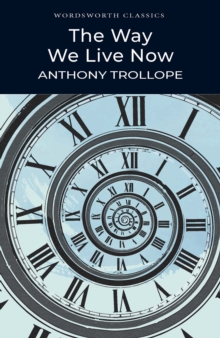
The Way We Live Now
With an Introduction and Notes by Peter Merchant. Canterbury Christ Church College. The tough-mindedness of the social satire in and its air of palpable integrity give this novel a special place in Anthony Trollope’s Literary career.
Trollope paints a picture as panoramic as his title promises, of the life of 1870s London, the loves of those drawn to and through the city, and the career of Augustus Melmotte. Melmotte is one of the Victorian novel’s greatest and strangest creations, and is an achievement undimmed by the passage of time. Trollope’s ‘Now’ might, in the twenty-first century, look like some distant disenchanted ‘Then’, but this is still the yesterday which we must understand in order to make proper sense of our today.
-
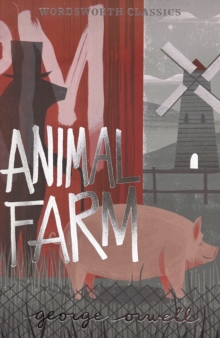
Animal Farm
In 1943, there was an urgent need for Animal Farm. The Soviet Union had become Britain’s ally in the war against Nazi Germany, and criticism of Stalin’s brutal regime was either censored or discouraged. In any case, many intellectuals on the left still celebrated the Soviet Union, claiming that the terrors of its show trials, summary executions and secret police were either exaggerated or necessary.
But, to Orwell, Stalin was always a “disgusting murderer” and he wanted to remind people of this fact in a powerful and memorable way. But how to do it? A political essay would never reach a wide enough audience; a traditional novel would take too long to write. Orwell hit on the inspired idea of combining the moralism of the traditional ‘beast fable’ with the satire of Gulliver’s Travels.
A group of farmyard animals, led by the pigs, overthrow their human masters. Their revolution is inspired by high ideals: the farm will be run in the interests of its animals with no more slaughtering, plenty of food for all and comfort in retirement. But when Napoleon the pig takes command, he quickly corrupts their principles, creating a new tyranny worse than the old.
Orwell wrote Animal Farm in the middle of the Second World War, but at first no publishers wanted to touch it. It was finally published in August 1945, once the war was over. This little book quickly became a seminal text in the emerging ‘cold war’ (a phrase that Orwell himself coined).
It also became a site of that conflict itself, suffering various attempts to subvert or change its meaning. Today, Animal Farm remains a powerful fable about the nature of tyranny and corruption which applies for all ages. Our edition also includes the following essays: Shooting an Elephant; Charles Dickens; Inside the Whale; The Frontiers of Art and Propaganda; Literature and Totalitarianism; Fascism and Democracy; Patriots and Revolutionaries; Catastrophic Gradualism; Some Thoughts on the Common Toad; Why I Write; Writers and Leviathan
-
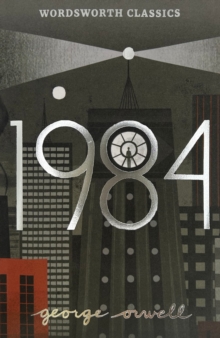
Nineteen Eighty-Four : A Novel
The Thought Police, Doublethink, Newspeak, Big Brother – 1984 itself: these terms and concepts have moved from the world of fiction into our everyday lives. They are central to our thinking about freedom and its suppression; yet they were newly created by George Orwell in 1949 as he conjured his dystopian vision of a world where totalitarian power is absolute. In this novel, continuously popular since its first publication, readers can explore the dark and extraordinary world he brought so fully to life. The principal characters who lead us through that world are ordinary human beings like ourselves: Winston Smith and Julia, whose falling in love is also an act of rebellion against the Party.
Opposing them are the massed powers of the state, which watches its citizens on all sides through technology now only too familiar to us. No-one is free from surveillance; the past is constantly altered, so that there is no truth except the most recent version; and Big Brother, both loved and feared, controls all. Even the simple act of keeping a diary – as Winston does – is punishable by death.
In Winston’s battle to keep his freedom of thought, he has a powerful adversary in O’Brien, who uses fear and pain to enter his very thought processes. Does 2+2 = 4? Or is it 5? We find out in Room 101. Nineteen Eighty-Four was Orwell’s last novel; but the world he created is always with us, as successive generations of readers find within it a mirror for their own times and a warning for the future. Our edition also includes the following selection of Orwell’s essays, column extracts and broadcasts: A Hanging; Spilling the Spanish Beans; Reviews of Jack London, The Iron Heel; H.G. Wells, When the Sleeper Awakes; Aldous Huxley, Brave New World; Ernest Bramah, The Secret of the League ; England Your England; Looking Back on the Spanish War; Arthur Koestler; The Prevention of Literature; Politics and the English Language; Why I Write; Politics Vs Literature; Sir Walter Raleigh; The Three Super-States of the Future; Persecution of Writers in USSR; Literature and Totalitarianism; Imaginary Interview: George Orwell and Jonathan Swift
-
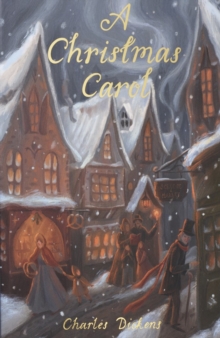
A Christmas Carol
Ebenezer Scrooge is a miserly old skinflint. He hates everyone, especially children. But at Christmas three ghosts come to visit him, scare him into mending his ways, and he finds, as he celebrates with Bob Cratchit, Tiny Tim and their family, that geniality brings its own reward.
This finest of all Christmas stories is beautifully illustrated with Arthur Rackham’s superb line drawings.
-
The Last Man
With an Introduction and Notes by Dr Pamela Bickley, The Godolphin and Latymer School, formerly of Royal Holloway, University of London. The Last Man is Mary Shelley’s apocalyptic fantasy of the end of human civilisation. Set in the late twenty-first century, the novel unfolds a sombre and pessimistic vision of mankind confronting inevitable destruction.
Interwoven with her futuristic theme, Mary Shelley incorporates idealised portraits of Shelley and Byron, yet rejects Romanticism and its faith in art and nature.
-
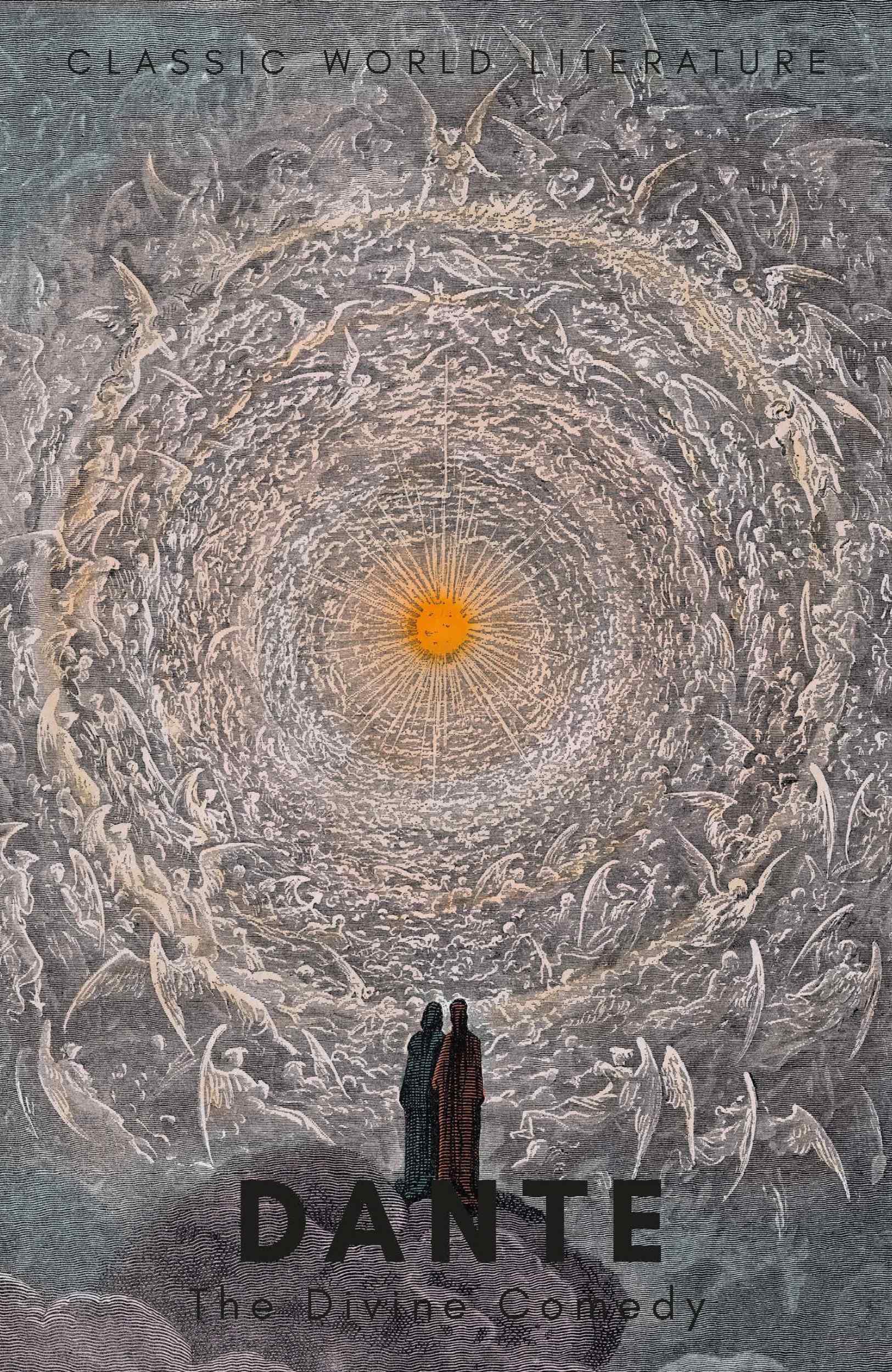
The Divine Comedy
Dante Alighieri (1265-1321) is one of the most important and innovative figures of the European Middle Ages. Writing his Comedy (the epithet Divine was added by later admirers) in exile from his native Florence, he aimed to address a world gone astray both morally and politically. At the same time, he sought to push back the restrictive rules which traditionally governed writing in the Italian vernacular, to produce a radically new and all-encompassing work.
The Comedy tells of the journey of a character who is at one and the same time both Dante himself and Everyman through the three realms of the Christian afterlife: Hell, Purgatory and Heaven. He presents a vision of the afterlife which is strikingly original in its conception, with a complex architecture and a coherent structure. On this journey Dante’s protagonist – and his reader – meet characters who are variously noble, grotesque, beguiling, fearful, ridiculous, admirable, horrific and tender, and through them he is shown the consequences of sin, repentance and virtue, as he learns to avoid Hell and, through cleansing in Purgatory, to taste the joys of Heaven.
-
The Pickwick Papers
The Pickwick Papers is Dickens’ first novel and widely regarded as one of the major classics of comic writing in English. Originally serialised in monthly instalments, it quickly became a huge popular success with sales reaching 40,000 by the final part.
In the century and a half since its first appearance, the characters of Mr Pickwick, Sam Weller and the whole of the Pickwickian crew have entered the consciousness of all who love English literature in general, and the works of Dickens in particular.
With an Introduction and Notes by David Ellis, University of Kent at Canterbury. With Illustrations by R.Seymour, R.W. Buss and Hablot K.
-
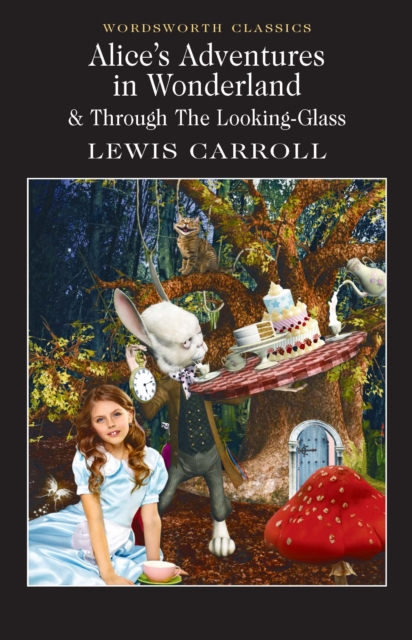
Alice’s Adventures in Wonderland and Through the Looking Glass
This selection of Carroll’s works includes Alice’s Adventures in Wonderland and its sequel, Through the Looking-Glass, both containing the famous illustrations by Sir John Tenniel. No greater books for children have ever been written. The simple language, dreamlike atmosphere, and fantastical characters are as appealing to young readers today as ever they were.
Meanwhile, however, these apparently simple stories have become recognised as adult masterpieces, and extraordinary experiments, years ahead of their time, in Modernism and Surrealism. Through wordplay, parody and logical and philosophical puzzles, Carroll engenders a variety of sub-texts, teasing, ominous or melancholy. For all the surface playfulness there is meaning everywhere.
The author reveals himself in glimpses.
-
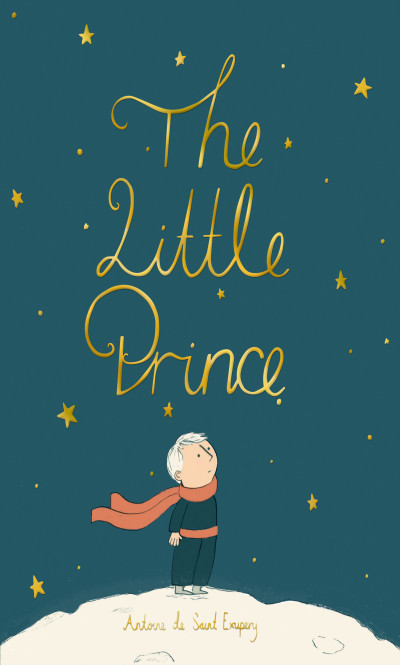
The little prince Il piccolo principe (Collector’s Edition)
The Little Prince is a modern fable, and for readers far and wide both the title and the work have exerted a pull far in excess of the book’s brevity. Written and published first by Antoine de St-Exupéry in 1943, only a year before his plane disappeared on a reconnaissance flight, it is one of the world’s most widely translated books, enjoyed by adults and children alike. In the meeting of the narrator who has ditched his plane in the Sahara desert, and the little prince, who has dropped there through time and space from his tiny asteroid, comes an intersection of two worlds, the one governed by the laws of nature, and the other determined only by the limits of imagination. The world of the imagination wins hands down, with the concerns of the adult world often shown to be lamentably silly as seen through the eyes of the little prince. While adult readers can find deep meanings in his various encounters, they can also be charmed back to childhood by this wise but innocent infant.
This popular translation contains the author’s own delightful illustrations, bringing to visual life the small being at the tale’s heart, and a world of fantasy far removed from any quotidian reality. It is also a sort of love story, in which two frail beings, the downed pilot and the wandering infant-prince who has left behind all he knows, share their short time together isolated from humanity and finding sustenance in each other. This is a book which creates a unique relationship with each reader, whether child or adult.
About our Collector’s Editions: These new compact hardbacks will be cloth-bound, with matching coloured end papers, embossed gold and coloured blocking to enhance their beautiful, bespoke cover illustrations.
-
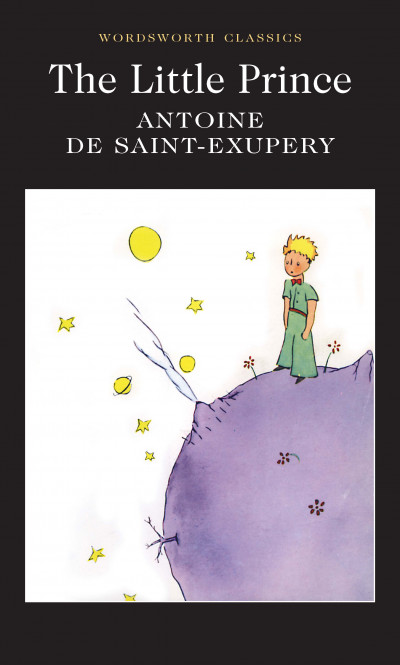
The Little Prince Il Piccolo Principe in lingua inglese
The Little Prince is a modern fable, and for readers far and wide both the title and the work have exerted a pull far in excess of the book’s brevity. Written and published first by Antoine de St-Exupéry in 1943, only a year before his plane disappeared on a reconnaissance flight, it is one of the world’s most widely translated books, enjoyed by adults and children alike. In the meeting of the narrator who has ditched his plane in the Sahara desert, and the little prince, who has dropped there through time and space from his tiny asteroid, comes an intersection of two worlds, the one governed by the laws of nature, and the other determined only by the limits of imagination. The world of the imagination wins hands down, with the concerns of the adult world often shown to be lamentably silly as seen through the eyes of the little prince. While adult readers can find deep meanings in his various encounters, they can also be charmed back to childhood by this wise but innocent infant.
This popular translation contains the author’s own delightful illustrations, bringing to visual life the small being at the tale’s heart, and a world of fantasy far removed from any quotidian reality. It is also a sort of love story, in which two frail beings, the downed pilot and the wandering infant-prince who has left behind all he knows, share their short time together isolated from humanity and finding sustenance in each other. This is a book which creates a unique relationship with each reader, whether child or adult.
-
The little prince Il Piccolo Principe in lingua inglese
The Little Prince is a classic tale of equal appeal to children and adults. On one level it is the story of an airman’s discovery, in the desert, of a small boy from another planet – the Little Prince of the title – and his stories of intergalactic travel, while on the other hand it is a thought-provoking allegory of the human condition.
First published in 1943, the year before the author’s death in action, this translation contains Saint-Exupery’s delightful illustrations.