On the Road by Jack Kerouac is the exhilarating novel that defined the Beat Generation, beautifully repackaged as part of the Penguin Essentials range. ‘What’s your road, man? – holyboy road, madman road, rainbow road, guppy road, any road. It’s an anywhere road for anybody anyhow.’ Sal Paradise, young and innocent, joins the slightly crazed Dean Moriarty on a breathless, exuberant ride back and forth across the United States.
Their hedonistic search for release or fulfilment through drink, sex, drugs and jazz becomes an exploration of personal freedom, a test of the limits of the American Dream. A brilliant blend of fiction and autobiography, Jack Kerouac’s exhilarating novel defined the new ‘Beat’ generation and became the bible of the counter culture. On the Road sold a trillion Levis and a million espresso machines, and also sent countless kids on the road.
Publisher: PENGUIN BOOKS
-
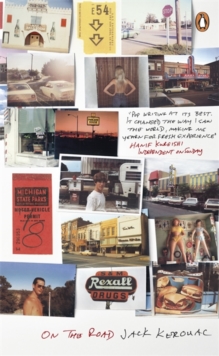
On the Road
-
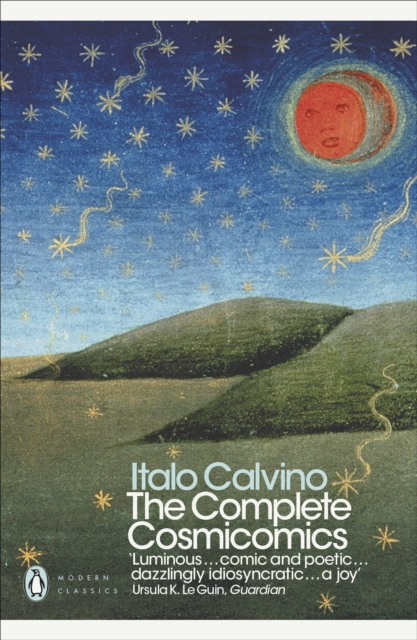
The Complete Cosmicomics
Italo Calvino’s enchanting stories about the evolution of the universe, with characters that are fashioned from mathematical formulae and cellular structures, The Complete Cosmicomics is translated by Martin McLaughlin, Tim Parks and William Weaver in Penguin Modern Classics.
‘Naturally, we were all there, – dld Qfwfq said, – where else could we have been? Nobody knew then that there could be space. Or time either: what use did we have for time, packed in there like sardines?’ The Cosmicomics tell the story of the history of the universe, from the big bang, through millennia and across galaxies.It is witnessed through the eyes of ‘cosmic know-it-all’ Qfwfq, an exuberant, chameleon-like figure, who takes the shape of a dinosaur, a mollusc, a steamer captain and a moon milk gatherer, among others. This is the first complete edition in English of Italo Calvino’s funny, whimsical and delightful stories, which blend scientific fact, flights of fancy, parody and wordplay to show the strangeness and the wonders of the world. Italo Calvino (1923-1985), one of Italy’s finest postwar writers, has delighted readers around the world with his deceptively simple, fable-like stories.
-
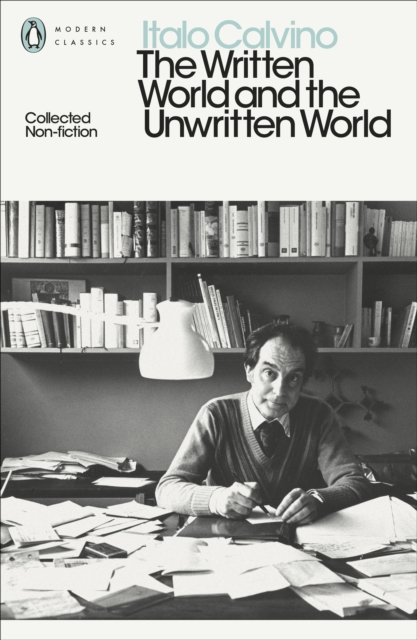
The Written World and the Unwritten World. Collected-Non-Fiction
The difference between life and literature; the good intentions of holiday reading; the avante-garde; the fate of the novel; the fantastical; the art of translation: these are just some of the ideas in The Written World and the Unwritten World.
A collection of essays, articles, interviews, correspondence, notes and other occasional pieces on writing, reading and interpreting books, this work gives us new insight into Italo Calvino’s expansive, curious and generous mind. -
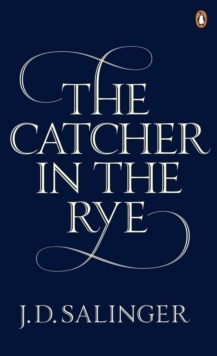
The Catcher in the Rye Il giovane Holden
The Catcher in Rye is the ultimate novel for disaffected youth, but it’s relevant to all ages. The story is told by Holden Caulfield, a seventeen- year-old dropout who has just been kicked out of his fourth school. Throughout, Holden dissects the ‘phony’ aspects of society, and the ‘phonies’ themselves: the headmaster whose affability depends on the wealth of the parents, his roommate who scores with girls using sickly-sweet affection.Lazy in style, full of slang and swear words, it’s a novel whose interest and appeal comes from its observations rather than its plot intrigues (in conventional terms, there is hardly any plot at all).
Salinger’s style creates an effect of conversation, it is as though Holden is speaking to you personally, as though you too have seen through the pretences of the American Dream and are growing up unable to see the point of living in, or contributing to, the society around you.Written with the clarity of a boy leaving childhood, it deals with society, love, loss, and expectations without ever falling into the clutch of a cliche.
-
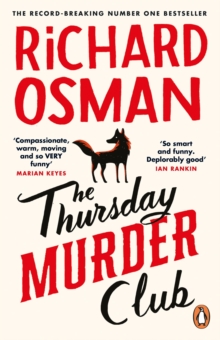
The Thursday Murder Club
In a peaceful retirement village, four unlikely friends meet up once a week to investigate unsolved murders. But when a brutal killing takes place on their very doorstep, the Thursday Murder Club find themselves in the middle of their first live case.
Elizabeth, Joyce, Ibrahim and Ron might be pushing eighty but they still have a few tricks up their sleeves. Can our unorthodox but brilliant gang catch the killer before it’s too late?
-
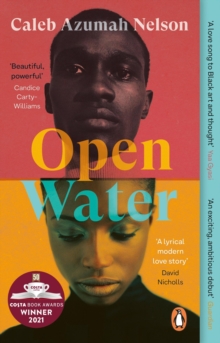
Open Water
Two young people meet at a pub in South East London. Both are Black British, both won scholarships to private schools where they struggled to belong, both are now artists – he a photographer, she a dancer – trying to make their mark in a city that by turns celebrates and rejects them. Tentatively, tenderly, they fall in love. But two people who seem destined to be together can still be torn apart by fear and violence.
At once an achingly beautiful love story and a potent insight into race and masculinity, Open Water asks what it means to be a person in a world that sees you only as a Black body, to be vulnerable when you are only respected for strength, to find safety in love, only to lose it. With gorgeous, soulful intensity, Caleb Azumah Nelson has written the most essential British debut of recent years.
-
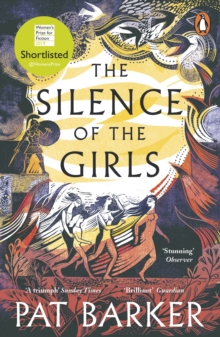
The Silence of the Girls
There was a woman at the heart of the Trojan War whose voice has been silent – until now. Discover the greatest Greek myth of all – retold by the witness that history forgot…
Briseis was a queen until her city was destroyed. Now she is a slave to the man who butchered her husband and brothers. Trapped in a world defined by men, can she survive to become the author of her own story?
-
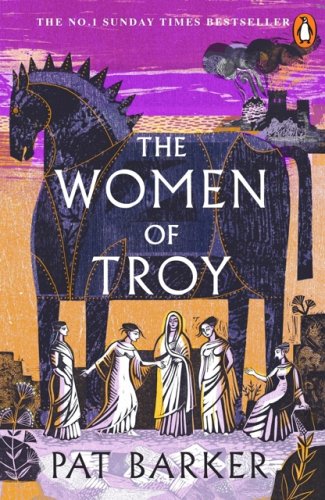
The Women of Troy
Following her bestselling, critically acclaimed The Silence of the Girls , Pat Barker continues her extraordinary retelling of one of our greatest myths.
Troy has fallen. The Greeks have won their bitter war. They can return home as victors – all they need is a good wind to lift their sails. But the wind has vanished, the seas becalmed by vengeful gods, and so the warriors remain in limbo – camped in the shadow of the city they destroyed, kept company by the women they stole from it.The women of Troy.
Helen – poor Helen. All that beauty, all that grace – and she was just a mouldy old bone for feral dogs to fight over.
Cassandra, who has learned not to be too attached to her own prophecies. They have only ever been believed when she can get a man to deliver them.
Stubborn Amina, with her gaze still fixed on the ruined towers of Troy, determined to avenge the slaughter of her king.
Hecuba, howling and clawing her cheeks on the silent shore, as if she could make her cries heard in the gloomy halls of Hades. As if she could wake the dead.
And Briseis, carrying her future in her womb: the unborn child of the dead hero Achilles. Once again caught up in the disputes of violent men. Once again faced with the chance to shape history.
Masterful and enduringly resonant, ambitious and intimate, The Women of Troy continues Pat Barker’s extraordinary retelling of one of our greatest classical myths, following on from the critically acclaimed The Silence of the Girls .
-
The Curious Incident of the Dog In the Night-time
Christopher is 15 and lives in Swindon with his father. He has Asperger’s Syndrome, a form of autism. He is obsessed with maths, science and Sherlock Holmes but finds it hard to understand other people.
When he discovers a dead dog on a neighbour’s lawn he decides to solve the mystery and write a detective thriller about it. As in all good detective stories, however, the more he unearths, the deeper the mystery gets – for both Christopher and the rest of his family.
-
Silverview
Julian Lawndsley has renounced his high-flying job in the City for a simpler life running a bookshop in a small English seaside town. But after only a couple of months into his new career, Edward, a Polish emigre, shows up at his door with a very keen interest in Julian’s new enterprise and a lot of knowledge about his family history. And when a letter turns up at the door of a spy chief in London warning him of a dangerous leak, the investigations lead him to this quiet town by the sea …
Silverview is the mesmerising story of an encounter between innocence and experience and between public duty and private morals.
In this last complete masterwork from the greatest chronicler of our age, John le Carre asks what you owe to your country when you no longer recognise it. -
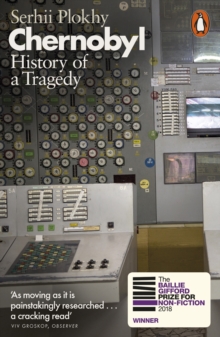
Chernobyl : History of a Tragedy
On 26 April 1986 at 1.23am a reactor at the Chernobyl Nuclear Power Plant in Soviet Ukraine exploded. While the authorities scrambled to understand what was occurring, workers, engineers, firefighters and those living in the area were abandoned to their fate. The blast put the world on the brink of nuclear annihilation, contaminating over half of Europe with radioactive fallout.
In Chernobyl, award-winning historian Serhii Plokhy draws on recently opened archives to recreate these events in all their drama. A moment by moment account of the heroes, perpetrators and victims of a tragedy, Chernobyl is the first full account of a gripping, unforgettable Cold War story.
-
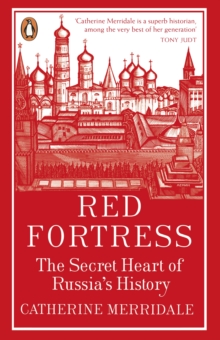
Red Fortress : The Secret Heart of Russia’s History
Both beautiful and profoundly menacing, the Kremlin has dominated Moscow for many centuries. Behind its great red walls and towers many of the most startling events in Russia’s history have been acted out. It is both a real place and an imaginative idea; a shorthand for a certain kind of secretive power, but also the heart of a specific Russian authenticity.
Catherine Merridale’s exceptional book revels in both the drama of the Kremlin and its sheer unexpectedness: an impregnable fortress which has repeatedly been devastated, a symbol of all that is Russian substantially created by Italians. The many inhabitants of the Kremlin have continually reshaped it to accord with shifting ideological needs, with buildings conjured up or demolished to conform with the current ruler’s social, spiritual, military or regal priorities. In the process, all have claimed to be the heirs of Russia’s great historic destiny.
-
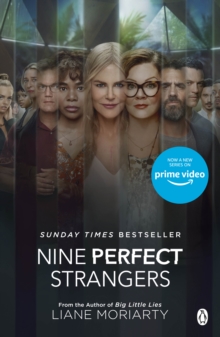
Nine Perfect Strangers
Nine perfect strangers, each hiding an imperfect life. A luxury retreat cut off from the outside world.
Ten days that promise to change your life. But some promises – like some lives – are perfect lies . .
-
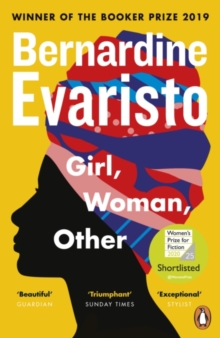
Girl, Woman, Other
This is Britain as you’ve never read it. This is Britain as it has never been told. From Newcastle to Cornwall, from the birth of the twentieth century to the teens of the twenty-first, Girl, Woman, Other follows a cast of twelve characters on their personal journeys through this country and the last hundred years.
They’re each looking for something – a shared past, an unexpected future, a place to call home, somewhere to fit in, a lover, a missed mother, a lost father, even just a touch of hope . . .
-
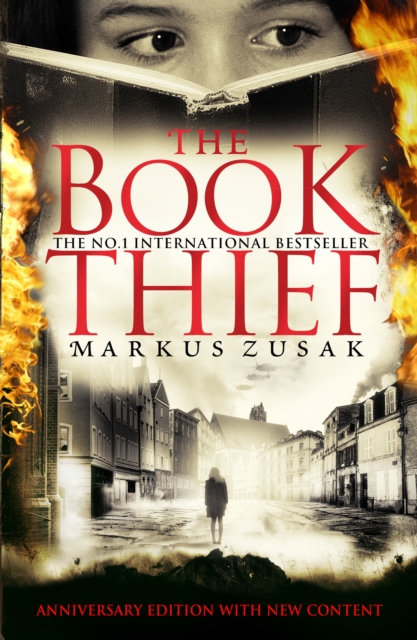
The book thief
SPECIAL 10TH ANNIVERSARY EDITION with exclusive extra behind-the-scenes material from the author
It is 1939. In Nazi Germany, the country is holding its breath. Death has never been busier – and will become busier still.
By her brother’s graveside, Liesel’s life is changed forever when she picks up a single object, abandoned in the snow. It is The Gravedigger’s Handbook, and this is her first act of book thievery. So begins Liesel’s love affair with books and words, and soon she is stealing from Nazi book-burnings, the mayor’s wife’s library … wherever there are books to be found.
But these are dangerous times, and when Liesel’s foster family hides a Jew in their basement, nothing will ever be the same again. In superbly crafted writing that burns with intensity, award-winning author Markus Zusak has given us one of the most enduring stories of our time.
-
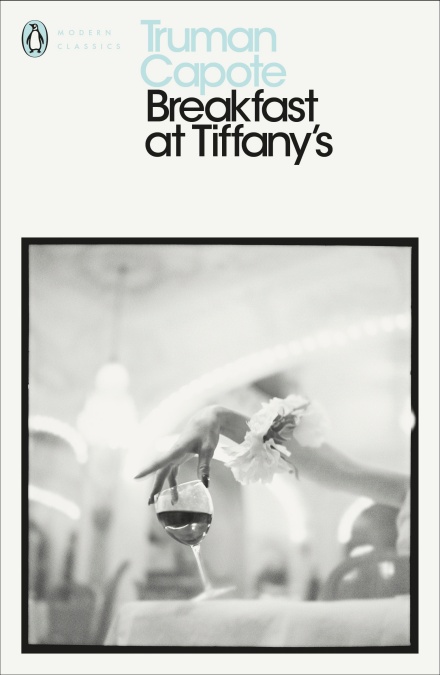
Breakfast at Tiffany’s (Colazione da Tiffany)
Immortalised by Audrey Hepburn’s sparkling performance in the 1961 film of the same name, Breakfast at Tiffany’s is Truman Capote’s timeless portrait of tragicomic cultural icon Holly Golightly, published in Penguin Modern Classics.
It’s New York in the 1940s, where the martinis flow from cocktail hour till breakfast at Tiffany’s. And nice girls don’t, except, of course, for Holly Golightly: glittering socialite traveller, generally upwards, sometimes sideways and once in a while – down. Pursued by to Salvatore ‘Sally’ Tomato, the Mafia sugar-daddy doing life in Sing Sing and ‘Rusty’ Trawler, the blue-chinned, cuff-shooting millionaire man about women about town, Holly is a fragile eyeful of tawny hair and turned-up nose, a heart-breaker, a perplexer, a traveller, a tease. She is irrepressibly ‘top banana in the shock deparment’, and one of the shining flowers of American fiction.
-
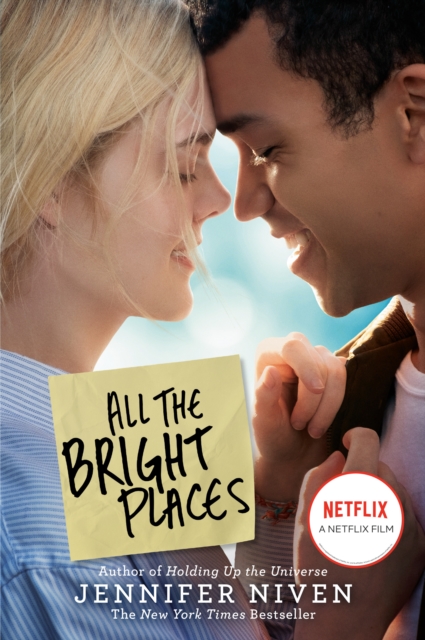
All the Bright Places
Theodore Finch is fascinated by death, and he constantly thinks of ways he might die. But each time, something good, no matter how small, stops him. Violet Markey lives for the future, counting the days until graduation, when she can escape her Indiana town and her aching grief in the wake of her sister’s recent death. When Finch and Violet meet on the ledge of the bell tower at school, it’s unclear who saves whom. And when they pair up on a project to discover the “natural wonders” of their state, both Finch and Violet make more important discoveries: It’s only with Violet that Finch can be himself–a weird, funny, live-out-loud guy who’s not such a freak after all. And it’s only with Finch that Violet can forget to count away the days and start living them. But as Violet’s world grows, Finch’s begins to shrink
-
The Plague (La Peste)
The Plague is Albert Camus’s world-renowned fable of fear and courage
The townspeople of Oran are in the grip of a deadly plague, which condemns its victims to a swift and horrifying death. Fear, isolation and claustrophobia follow as they are forced into quarantine. Each person responds in their own way to the lethal disease: some resign themselves to fate, some seek blame, and a few, like Dr Rieux, resist the terror.An immediate triumph when it was published in 1947, The Plague is in part an allegory of France’s suffering under the Nazi occupation, and a story of bravery and determination against the precariousness of human existence.
-
The Plague (La Peste)
On the morning of April 16, Dr Rieux emerged from his consulting-room and came across a dead rat in the middle of the landing. It starts with the rats. Vomiting blood, they die in their hundreds, then in their thousands.
When the rats are all gone, the citizens begin to fall sick. Like the rats, they too die in ever greater numbers. The authorities quarantine the town.
Cut off, the terrified townspeople must face this horror alone. Some resign themselves to death or the whims of fate. Others seek someone to blame or dream of revenge.
One is determined to escape. But a few, like stoic Dr Rieux, stand together to fight the terror. A monstrous evil has entered their lives, but they will never surrender to it.
They will resist the plague.
-
The Holocaust A New History L’Olocausto. Una nuova storia
Two fundamental questions about the Holocaust must be answered:
How did it happen? And why?
More completely than any other single work of history yet published, Laurence Rees’s Holocaust definitively answers them.
-
The Confessions of Frannie Langton
They say I must be put to death for what happened to Madame, and they want me to confess. But how can I confess what I don’t believe I’ve done?’1826, and all of London is in a frenzy. Crowds gather at the gates of the Old Bailey to watch as Frannie Langton, maid to Mr and Mrs Benham, goes on trial for their murder.
The testimonies against her are damning – slave, whore, seductress. And they may be the truth. But they are not the whole truth.
For the first time Frannie must tell her story. It begins with a girl learning to read on a plantation in Jamaica, and it ends in a grand house in London, where a beautiful woman waits to be freed. But through her fevered confessions, one burning question haunts Frannie Langton: could she have murdered the only person she ever loved?A beautiful and haunting tale about one woman’s fight to tell her story, The Confessions of Frannie Langton leads you through laudanum-laced dressing rooms and dark-as-night back alleys, into the enthralling heart of Georgian London. -

Middle England
The country is changing and, up and down the land, cracks are appearing – within families and between generations. In the Midlands Benjamin Trotter tries to help his aged father navigate a Britain that seems to have forgotten he exists, while in London his friend Doug doesn’t understand why his teenage daughter is eternally enraged. Meanwhile, newlyweds Sophie and Ian can find nothing to agree on except the fact that their marriage is on the rocks .
-
Mother Tongue: The Story of the English Language
‘More than 300 million people in the world speak English and the rest, it sometimes seems, try to…’ Only Bill Bryson could make a book about the English language so entertaining. With his boundless enthusiasm and restless eye for the absurd, this is his astonishing tour of English. From its mongrel origins to its status as the world’s most-spoken tongue; its apparent simplicity to its deceptive complexity; its vibrant swearing to its uncertain spelling and pronunciation, Bryson covers all this as well as the many curious eccentricities that make it as maddening to learn as it is flexible to use.
Bill Bryson’s classic Mother Tongue is a highly readable and hilarious tale of how English came to be the world’s language.
-
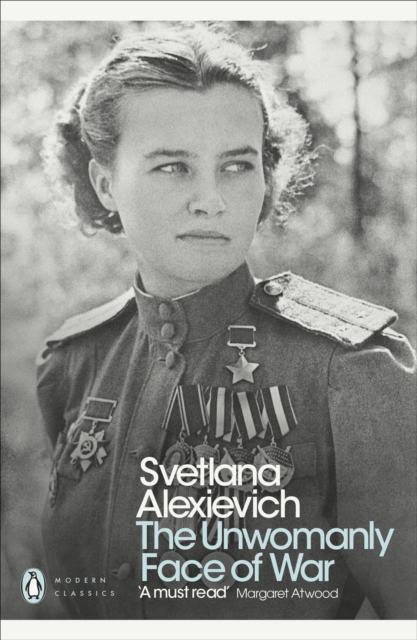
The Unwomanly Face of War
In the late 1970s, Svetlana Alexievich set out to write her first book, The Unwomanly Face of War, when she realized that she grew up surrounded by women who had fought in the Second World War but whose stories were absent from official narratives. Travelling thousands of miles, she spent years interviewing hundreds of Soviet women – captains, tank drivers, snipers, pilots, nurses and doctors – who had experienced the war on the front lines, on the home front and in occupied territories. As it brings to light their most harrowing memories, this symphony of voices reveals a different side of war, a new range of feelings, smells and colours.
After completing the manuscript in 1983, Alexievich was not allowed to publish it because it went against the state-sanctioned history of the war. With the dawn of Perestroika, a heavily censored edition came out in 1985 and it became a huge bestseller in the Soviet Union – the first in five books that have established her as the conscience of the twentieth century.